Posts

Showing posts with the label The Prisoner

The BBC/Big Finish Remake of The Prisoner

Image
I have been listening to the BBC/Big Finish audio version of The Prisoner, that series which is so idiosyncratic, completely dependent on the personality of its creator and of its time that it can't possibly be remade. Witness the 2009 AMC remake. Why on earth would mere mortals think that they can just remake such a legendary series? I have started watching this remake once and soon turned it off, and while it is referenced in The Prisonersphere, it isn't popular and everyone's gone back to arguing over the original. Which is why it gives me such pleasure to say that I have been enjoying watching the BBC/Big Finish version very much. In fact you'd better sit down because I'm about to alienate any remaining readers of this blog after offending everyone by being provocative about the American dream and utter the ultimate heresy in the world of The Prisoner, namely... The BBC/Big Finish remake is the best version of this show and in my opinion is actually better than ...
The Prisoner Episodes Paired as Films: Conclusion

Image
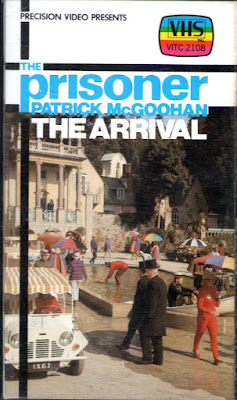
The introduction to this series of posts can be found  here. This is the conclusion of my series of posts about the paired episodes of The Prisoner released edited together as films by Precision Video in the 1980s, and David Fakrikian's ideas about them (article and video linked below). The fact that these pairs of episodes were released in the way they were (rather than being released as pairs of episodes on one video cassette) raises the curiosity of Prisoner fans because of Andrew Pixley's statement that The Prisoner was intended to be a series of full length TV movies rather than the series of individual episodes it was actually broadcast as. To the best of ny knowledge there is no evidence of which episodes Patrick McGoohan would have paired together and the only statement we have about this from him was that the show could have been done in seven single episodes.  My personal conclusion about this is that while this is a fascinating possibility, having now watched the ep...

The Prisoner Episodes Paired as Films: The Chimes of Big Ben and The General

Image
The introduction to this series of posts can be found  here. This post is about the two Prisoner episodes The Chimes of Big Ben and The General as they were released as one single film called The General in October 1983 by Precision Video. David Fakrikian, whose work I am hugely indebted to for these posts, makes the point that naturally there is an obvious connection between these two episodes because they both reference the general, in Chimes as a character in the Village and in The General as a computer. There is a further connection because bothe episodes make reference to the arts or education. He makes the fascinating point that when you go from the end of Chimes to the beginning of The General (without the 'Where am I' dialogue) it looks as if Number 2 is watching Nadia leave the Village by helicopter, which indeed it does. Although this is only apparent because it soon becomes clear in The General that the helicopter is looking for the runaway professor. A Chess game wi...

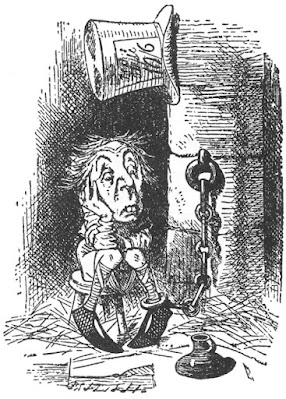
The Prisoner Episodes Paired as Films: Checkmate and Free for All. Part 2 - Structure and Lewis Carroll References

Image
The introduction to this series of posts can be found  here. This post is a continuation of the discussion I started in my last post about the episodes Checkmate and Free for All, as they were released joined together to make a film. In my last post I talked about the theme of these episodes and the whole film, and this post is about the structure of the two episodes put together. A Chess game B Talk about black/white and escaping C Psychiatric assessment D1 Given Number 8 as his monitor, who is also tricked E Rejects her, takes her pendant and gets ready an escape attempt with others Attempts escape F Brought back to the village A Introduces the theme of the election which is just as Alice in Wonderland as the chess game B Number 2 says he wants to distinguish the guards from the prisoners D2 Given Number 58 for the election period, but she is in on the deception Dissolution of outgoing council Spins round and goes down through the floor into a corridor C Tested in the labour exch...

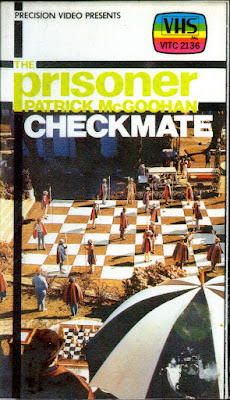
The Prisoner Episodes Paired as Films: Checkmate and Free for All. Part 1 - Theme

Image
The introduction to this series of posts can be found  here. This post is about the joined together episodes Checkmate and Free for All, released as one video called Checkmate by Precision Video in October 1983. David Fakrikian (see web page and video linked at the bottom of the page), whose work inspired these posts, says that they are joined together by going straight from the scene in Checkmate where the butler places a pawn on the chessboard to the scene in Free for All where the phone rings in Number 6's cottage and he answers it with 'What do you want?' This post has proved surprisingly complex so I'm going to have to split it over two, or even three blog posts. This one is about the theme which links the two episodes. Fakrikian feels the linking theme used to make the two episodes a single film with a unifying theme is that of telling the difference between the black and the white (Checkmate) and between prisoners and warders (Free for All). He identifies as othe...

The Prisoner Episodes Paired as Films: Many Happy Returns and A B and C

Image
The introduction to this series of posts can be found  here. This post is about the episodes Many Happy Returns (MHR) and A, B and C, released edited together into a film by Precision Video in July 1982 as Many Happy Returns. It is based on an online paper and video by David Fakrikian (link at the bottom of the page) with further padding by me. Fakrikian feels (in the video linked below) that the theme which joins the two episodes together is of returning to dreamland repeatedly, and the question of what is real and what isn't. For example is the village really empty, and is my real house real. Ultimately in this view the Village becomes the only reality and the outside world becomes the dream. He identifies some points of similarity: he compares Number 6 walking around the empty village as if in a dream in MHR and saying 'This is a dreamy party' in A, B and C; he also identifies Mrs Butterworth as a point of connection between the two. However I was delighted to find, when...

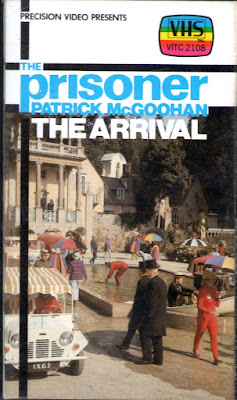
The Prisoner Episodes Paired as Films: Arrival and Schizoid Man

Image
The introduction to this series of posts can be found  here. This post is about the two Prisoner episodes Arrival and The Schizoid Man, considered together as joined together to make a film, which is as they were released on the first UK video release in the 1980s. I briefly considered the structure of Arrival alone in my previous post, to compare it to Koroshi and Shinda Shima, but I would like you to forget what I said there for the purposes of this post. That is because David Fakrikian's article which prompted this series of posts suggests a slightly different structure for the double episodes of The Prisoner and Dangerman (link below) so they must be considered slightly differently. Instead of the straightforward two related plots of the doubled up Danger Man episodes, of course The Prisoner structure as suggested by Fakrikian, requires a change of Number 2 rather than a change of baddie. Edit: Because my brain is like a sieve I managed to publish this blog post without stating...

The Prisoner Episodes Paired as Films: Koroshi and Shinda Shima

Image
The introduction to this series of posts can be found  here. As I stated in the introduction the purpose of these posts is to examine several episodes of Danger Man and The Prisoner in pairs to see how they work and particularly to identify any structure. So I have identified the following repeat structure in Koroshi and Shinda Shima, the final episodes of Danger Man, which were also joined together as a film. Koroshi : A Japanese female spy is pursued and killed. B Drake arrives in Tokyo as Edwards. C Potter gives him a record. D The record includes a picture of an emblem. E Drake seeks an explanation of the emblem from an old wise man. Drake meets Rosemary F Rosemary takes Drake to see Nigel Saunders. (Inversion of the going to the wise wo/man motif at E) G Drake is introduced to the death cult through the very heavy hint of a koroshi murder scene. H A man tries to kill Drake. I Drake saves Rosemary from a murder attempt. J The purpose of the death brotherhood is to end rule by t...

The Prisoner Episodes Paired as Films: Introduction

Image
I have had it in mind for a long time to do a series of posts about the different suggested viewing orders for the episodes of The Prisoner. That I have not so far done so is purely because I can't work out how to and feel that a single blog post about a single viewing order for the seventeen episodes would be unwieldy, and if they were split up it would become confusing. However there's another issue on the periphery of this subject. Actually, as is always tha case with The Prisoner, there are several. We all have heard that McGoohan had his seven favoured episodes and felt the others were merely padding. You can see quite an extensive discussion of this  here but the usual list given is Arrival, Free for All, Dance of the Dead, Checkmate, The Chimes of Big Ben, Once Upon a Time, The Conclusion. That's one issue: that the show's creator didn't mean it to look like it does. But then it gets more interesting. On  this web page (by David Fakrikian) you will see seve...

The Prisoner in the Asylum: Conclusion

Image
The introduction and master post to this series of posts about The Prisoner can be found  here . And so we've reached the end of this series of posts about The Prisoner being interpreted as being about mental health or The Village being a very special clinic, and I have some conclusions. My one regret or problem with this series of posts is that I think they are actually a book, and I'm in no fit state to put up with the reasonable expectations of publishers and the reading public these days so if anyone ever writes it, it won't be me. The area of psychiatry and psychological health in the middle of the twentieth century is a HUGE area which can be seen as referenced by this series in many ways in each episode. I chose to hang one or a few subjects about mental health on each episode as they related to it. I think this mainly worked, although I think a book length account would require a general overview of what was going on in psychiatry followed by an exhaustive account o...

The Prisoner in the Asylum: Fall Out

Image
The introduction and master post to this series of posts about The Prisoner can be found  here . Welcome to the most lively discharge meeting in world history! The recap of Once Upon a Time which begins this episode allows us to refresh our memories of what I have interpreted as therapy sessions which have led up to this point. I am however painfully reminded that Number 2 talks about degree absolute (decree absolute?) which sounds like a divorce using the language of marriage (for better or worse, till death us do part), and contains the same mixture of affectionate talk and violence that we saw in The Girl Who Was Death. I am therefore hearing the same mixture of violence, lack of boundaries, incest and just plain abuse that I have read here before. A possible simple interpretation of this episode in psychiatric terms would be that it depicts a very unwell person's inner world and also an absconsion from hospital of several patients. You could interpret it that way if you want th...

The Prisoner in the Asylum: The Girl Who Was Death Part 2

Image
The introduction and master post to this series of posts about The Prisoner can be found  here . In my last post I considered some of the possible interpretations, mainly with a psychiatric bias, of this episode. Now we come to the final possible interpretation I suggested. (6) Symbolism The episode begins by showing us the story book and so clearly suggests that what we are about to see may not be strictly speaking true. However this is one of the episodes of the show which is most full of symbols which can represent other things and a number of totally bizarre experiences, so it clearly isn't intended simply to be taken aa an entertaining story. I would suggest that one of the reasons this episode comes late in the run and lacks a set interpretation for the symbols and narrative, is that we are being invited to interpret them for ourselves. You've got it, exactly as in therapy. However I want to go through some of the symbols and tie them up to other things mentioned in the s...

The Prisoner in the Asylum: The Girl Who Was Death Part 1

Image
The introduction and master post to this series of posts about The Prisoner can be found  here . Warning : this post includes mention of traumatic experiences which some readers may find distressing. There are a number of ways of taking The Girl Who Was Death (at least for the purposes of this blog post) and I will touch on all of them during this post so I'll have to begin by listing them in the hope that readers will have some map for where I'm going. They are that: (1) Number 6 is psychotic and hallucinating all this without the aid of psychedelics; (2) Number 6 is paranoid; (3) Number 6 is still stoned on LSD from Living in Harmony and this is a hallucination which may form part of LSD therapy; (4) this is a story (which may or may not tell the ongoing story of the dangers of the Village); (5) the episode may represent a therapy session where Number 6 talks about a number of traumas; (6) the episode may represent a number of symbols which give clues to the meaning of the sh...